Rationale
In India, about 80% human population live
in rural areas and the rural economy is mostly of agrarian type where landless
and small land-holding people depend on livestock including poultry rearing for
their livelihood. According to the 20th Livestock census conducted
in 2019, total poultry population in India was 851.8 million of which 37.2%
population is native type. As compared to 19th Livestock census
conducted in 2012, native poultry population was increased by 45.79% in 2019,
whereas commercial poultry population was increased by only 4.5% during the
same period (DADF, 2019). In 2019, poultry meat production was 4.06 million
tonnes, which was around 50% of the total meat production in the country (DADF,
2019). In 2019, total egg production in the country was 103.32 billion with per
capita availability of 79eggs/head/annum. However, contribution of egg
production by native chickens was 17.8% of the total egg production in the
country. The annual growth rate of meat and egg production has been pegged at
around 7-9% and 5-6%, respectively.
Chicken (Gallus
gallus domesticus) has been one of the most significant animal species
across the Globe because of its huge extent as important source of animal
protein in human diet. India has diverse agroclimatic regions that contains
unique scope of altitudes and climates making astounding genetic diversity of
Indian chickens. As a nodal agency for breed registration in India, ICAR-NBAGR,
Karnal, India registered 19 indigenous chicken breeds, which are Ankaleshwar,
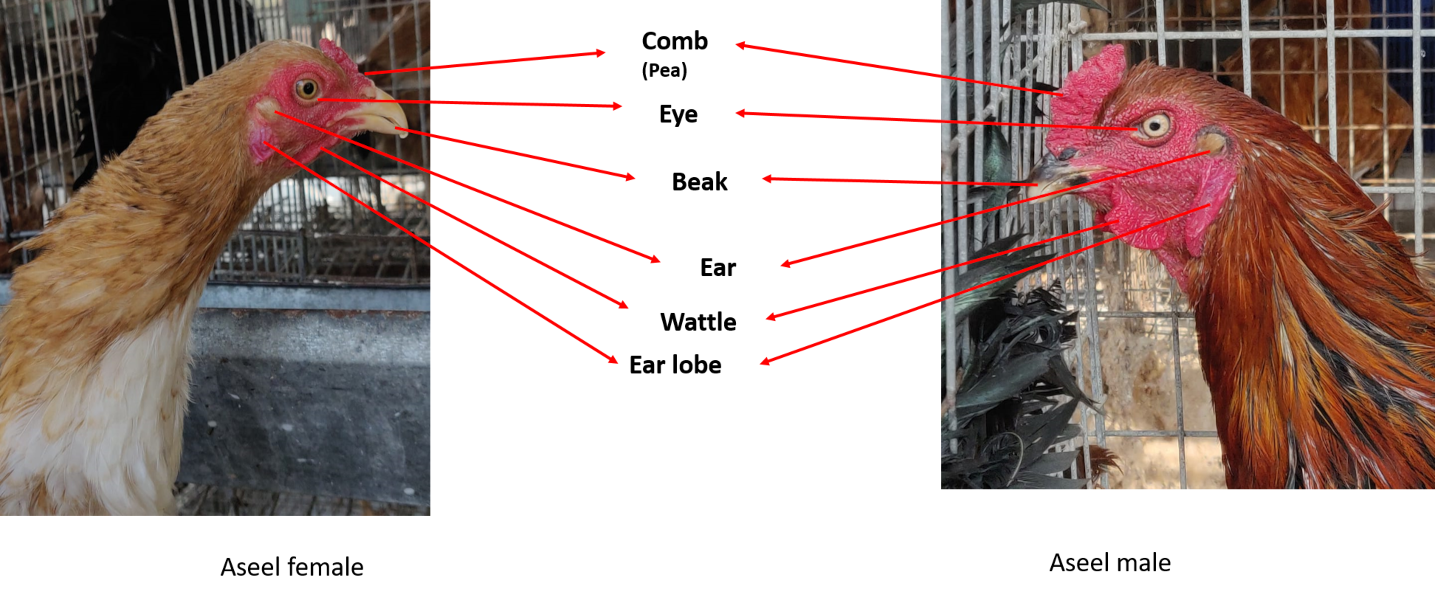
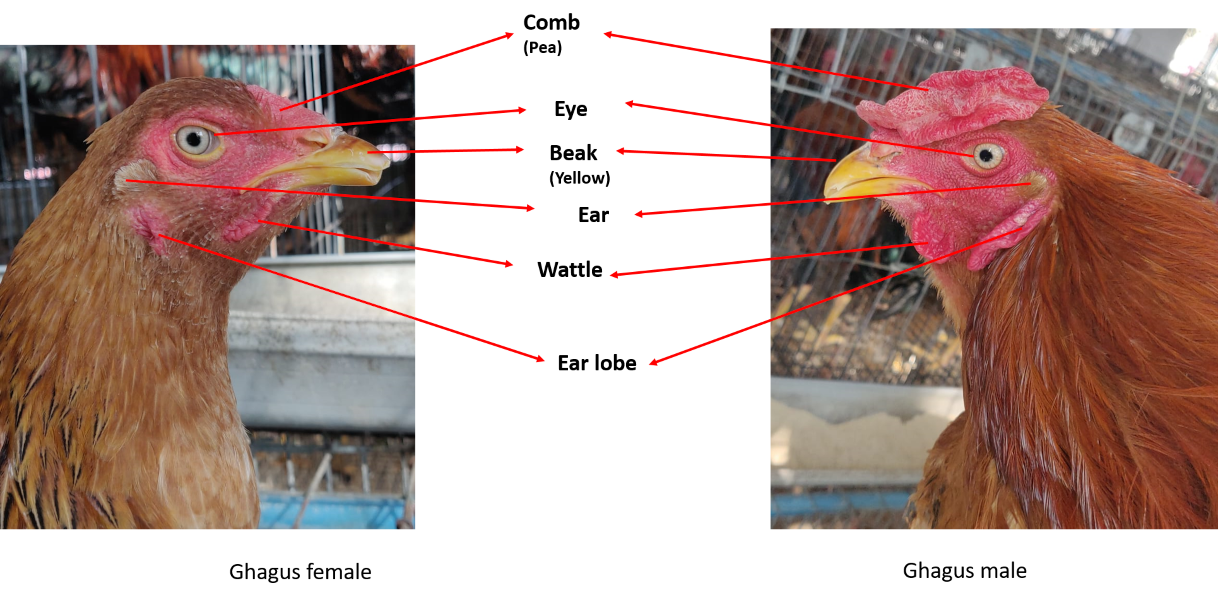
Aseel, Busra, Chittagong (Malay), Danki, Daothigir, Ghagus, Harringhata Black,
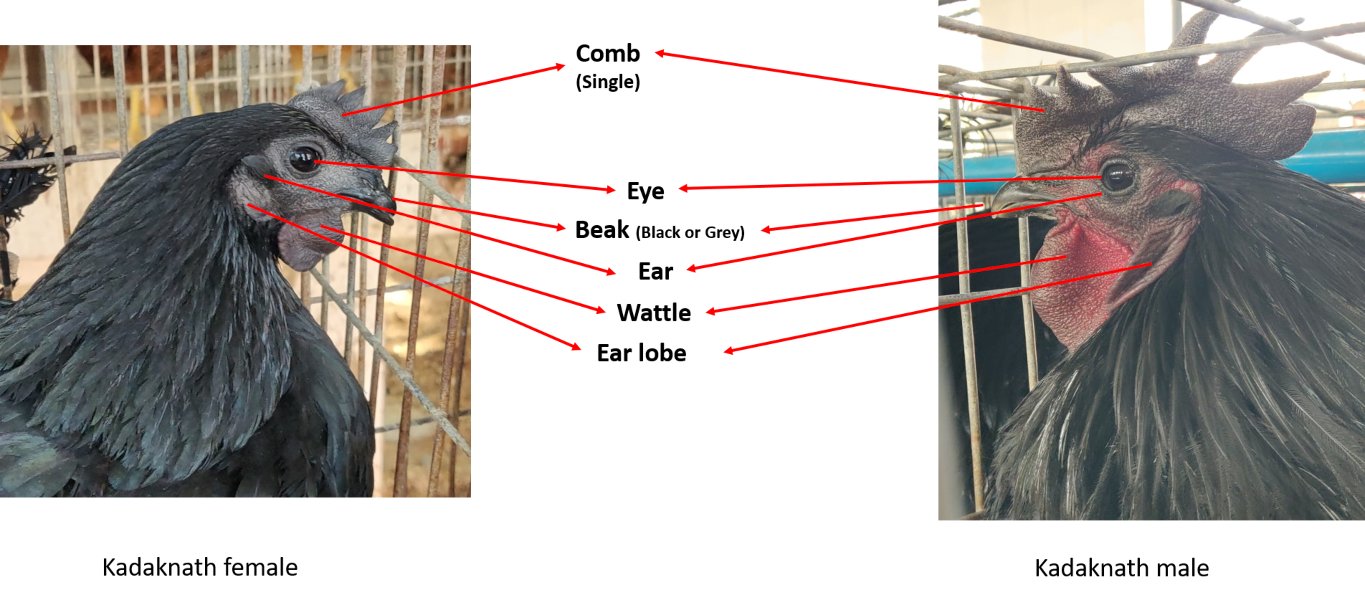
Kadaknath, Kalasthi, Kashmir Favorolla, Miri, Nicobari, Punjab Brown,
Tellichery, Mewari, Kaunayen, Hansli and Uttara. These native chicken breeds
spread across the country where the local people rear these birds for their
socio-economic benefits.
Due to abundance
of many new crossbred varieties spread all over the country, the native pure
breed chicken populations are facing problems of existence. Farmers prefer
these varieties for their better productivity and use these birds for
production of chicks. Sometimes, they cross these varieties with local native breeds
keeping in mind of obtaining more yield from the crosses developed from native
breeds. On account of such indiscriminate un-scientific crosses, many of the
native chicken breeds under threat and their populations are decreasing
gradually. The Government of India is time to time conducting Livestock and
Poultry census in the country to update the animal population and their
contribution in the national economy. Many Government Organizations or their
sponsored organizations are in fact involved in Census activities. During
surveying the livestock and poultry populations, these organizations are enumerating
the numbers and the performances of Livestock and poultry breeds. These breed
specific enumeration needs specialized and experienced technical persons to
identify the pure breeds for population specific census. Sometimes, human
errors of judging the birds reduce the accuracy of enumeration. In addition,
there are a lot of variabilities among the enumerators in enumerating animal
population. To conduct uniform survey, a common approach may be adopted by the
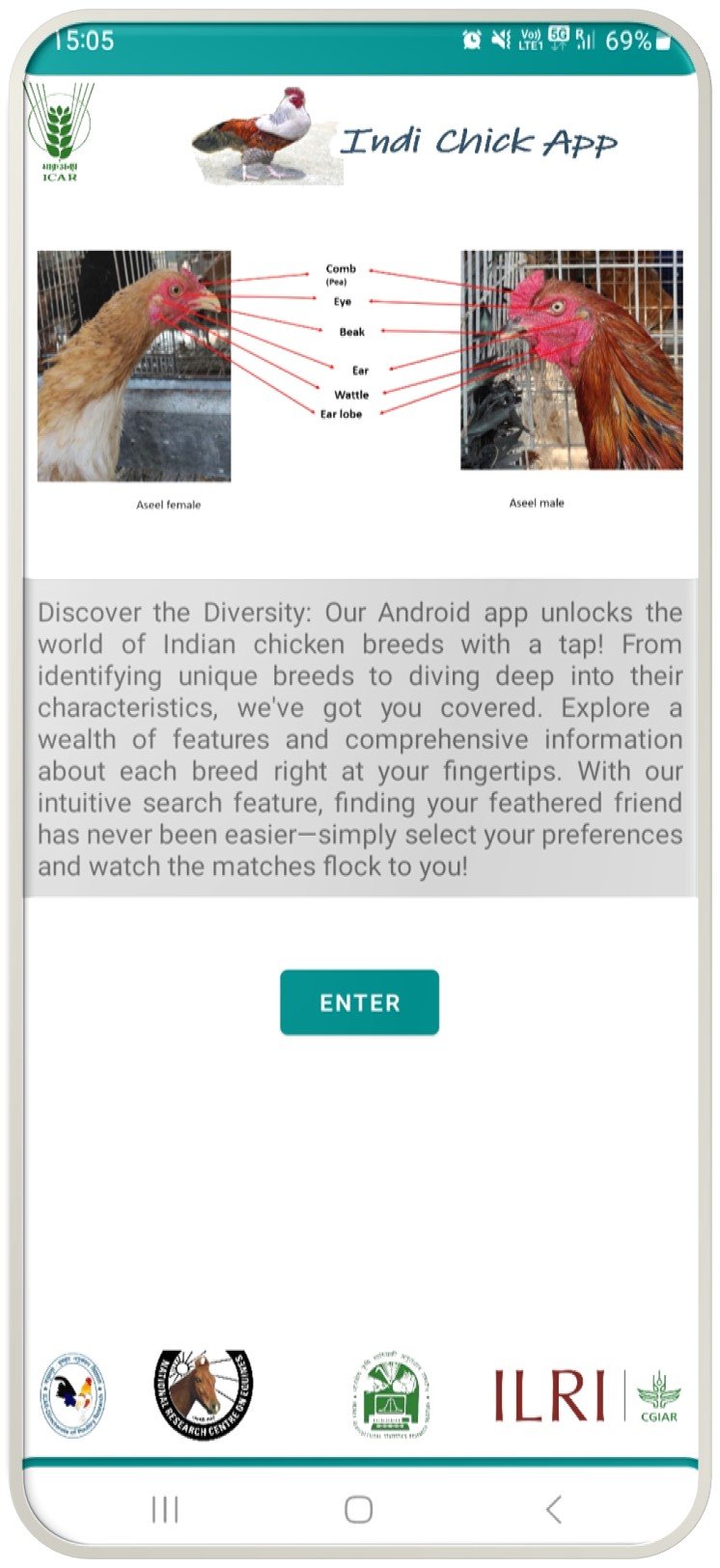
enumerators for which an Android based App may be extremely helpful for the
enumerators to count and record the population size and performance information
of the animals. Till date, there is no such App is available in the country for
conducting such breed-based census of livestock and poultry. Under such
scenario, we have developed a mobile phone-based App to conduct accurate survey
of livestock and poultry in the country.
Rearing of native birds
Chickens have been domesticated in
India for various purposes including decoration, religions, cockfighting, and
food production. In India, different agro-climatic regions harbors different
breeds of chicken, which are adapted in those specific environments. The local
farmers are very conservative and they rear those birds for their
socio-economic purposes. They do not prefer to sell their birds to the farmers
outside the home tracts of that specific breed and those birds have become the
part and partial of the life of local people. Thus, the farmers maintain the
identity of the specific local birds and accordingly, they are maintaining
those local birds since last few centuries. On account of geographical and
reproductive isolation of the local birds, the birds' phenotypes and
adaptability become unique due to same lineage and breeding within the group.
The rural people
mostly prefer rearing of native chickens over high yielding exotic birds as the
native birds do not need extra nutritional and managemental support for
producing eggs or meat when the people provide their kitchen and house waste to
the birds as supplementary feed. The native birds perform at their best with
scavenging in the backyards of their owners without getting extra support,
which needs additional investment. Thus, for rural people, rearing native chickens
not only provide their livelihood but also nutritional security.
The phenotypes of
the indigenous chicken population varied in shape, size, anatomy, growth,
production, reproduction, etc. accordingly, there are differences in appearance
of these population found in different regions of the country. There is a need
to characterize these native populations for preservation and improvement of
their performances for the benefit of poultry keepers. Hence, it is immensely
important to compile concise phenotypic and genotypic characters of native
chicken breeds of India from the published literature so that the stakeholders
may categorise their birds in a particular indigenous breed group or any other
group or non-descript type. At present, predominance of many commercial chicken
varieties at the village level farmers make the farmers very difficult to
protect their indigenous stock in pure forms as most of the consumers in India
prefer eggs/meat of indigenous chicken over those of commercial chicken
varieties and accordingly, the farmers of pure indigenous chicken breeds fetch
better premium price of eggs/meat of indigenous chicken over those of
commercial chicken.
Future prospective and
commercial use of Indian chicken
India having rich biodiversity in
poultry germplasm adaptable in diversed agroclimatic regions caters
socio-economic needs of millions of rural poultry farmers by supporting them
monetarily through selling poultry produces such as eggs and meat. Indian
sub-continent covers various climatic conditions such as deserts; hot and humid
coastal regions; hilly terrain regions; plain agricultural lands; arid and
semi-arid regions; heavy, medium and low rainfall regions; island ecosystems
etc. where indigenous chicken breeds found their home tracts and perform at
their best. In the difficult agroclimatric conditions such as deserts, hilly
terrains, arid zones and island ecosystems, exotic chicken breeds mostly facing
adaptability problems do not perform well and sometimes, face survivability
issues on account of severe environmental stress. However, indigenous breeds
combat these adverse climatic conditions and perform well, for example,
Nicobari chicken lay 150 eggs per annum under island ecosystem (Andaman &
Nicobar Island) where temperature rich upto 40oC with more than 95%
relative humidity through out the day and night. The Mewari chicken adapted at
desert climate of Rajasthan state attain body weight of 1.9kg in cocks and
1.2kg in hens at 18 to 20 weeks of age and hens lay 40 to 50eggs per annum. Thus,
the rural farmers of indigenous chicken breeds possessing beneficial genes
controlling adaptability in the adverse climatic conditions can fetch
supplementary incomes through selling eggs and meat during lean season.
The unique traits
of the indigenous breeds such as adaptability, survivability in the hot and
humid stressful conditions, survivability on the low input diet or through
scavenging, black colour meat, flying and running habbits for protecting them
from predators, long shank length etc. may be utilized to develop new high
yielding chicken varieties adaptable to the adverse climatic conditions through
introgression of the unique traits in recipient exotic or high yielding chicken
breeds by subsequent selective breeding for 5 to 6 generations followed by
random mating. Through gene introgression approach, location specific high
yielding chicken varieties may be developed for rearing them in the specific
regions, which can successfully caters the needs of the local farmers. The
poultry produces such as meat and eggs of the indigenous as well as location
specific chicken varieties can fetch premium price and consequently, benefits
the local farmers. The systematic farming approach thus, can uplift the socio-economic
conditions of the rural farmers in India.
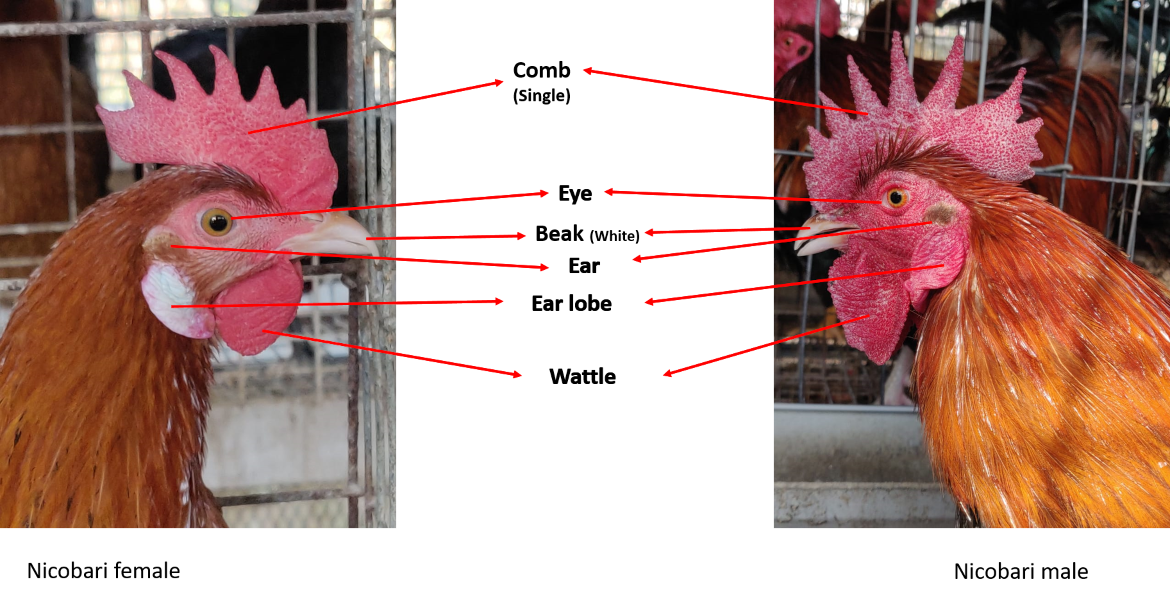
)
)
)
)
)
)