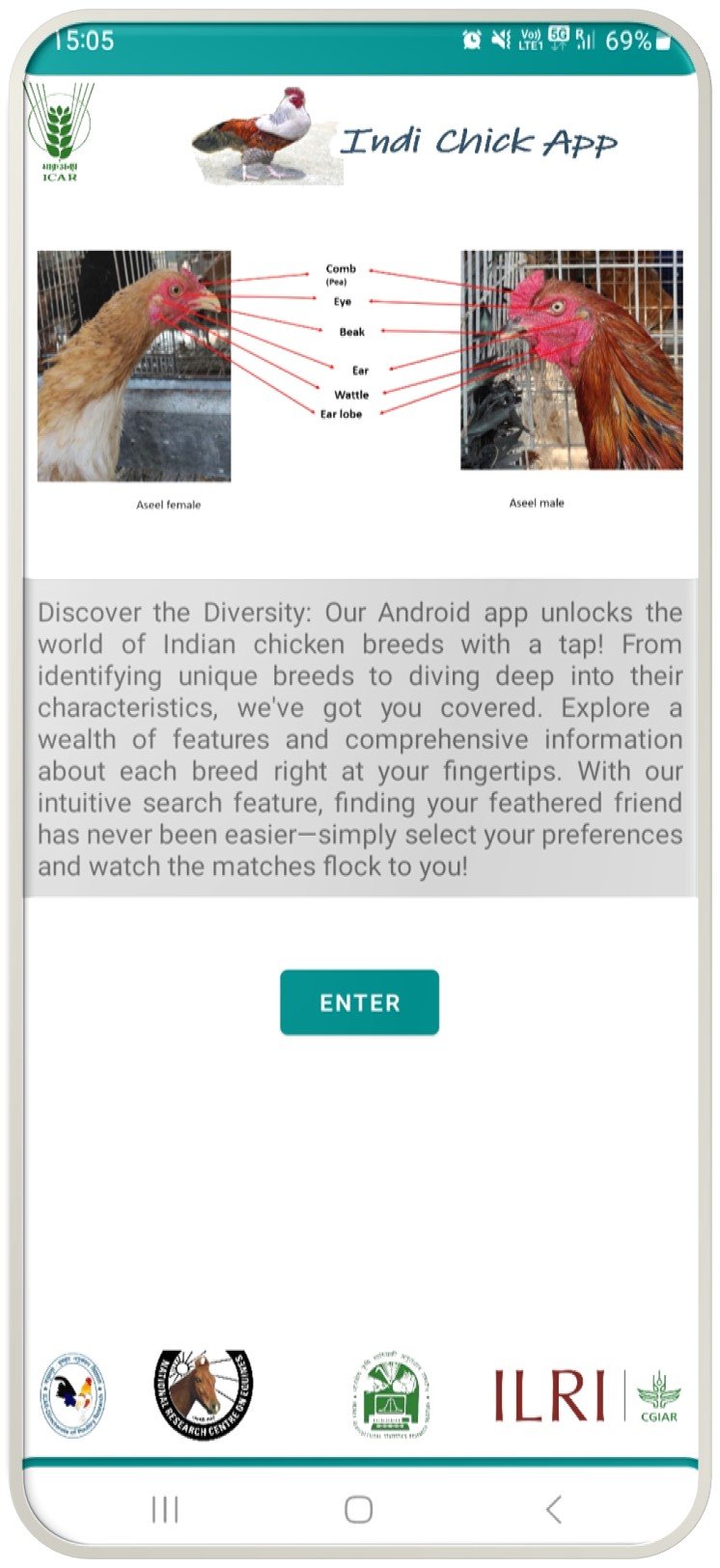
In India, 19 chicken breeds were characterized
and registered by ICAR-National Bureau of Animal Genetic Resources, Karnal,
Haryana. The home tracts and physical characteristics of these native chicken
breeds as well as unique meat and egg quality traits of indigenous chicken breeds have been briefed below.
|
1. Ankaleshwar
Unique morphological characterization of native chickens of India
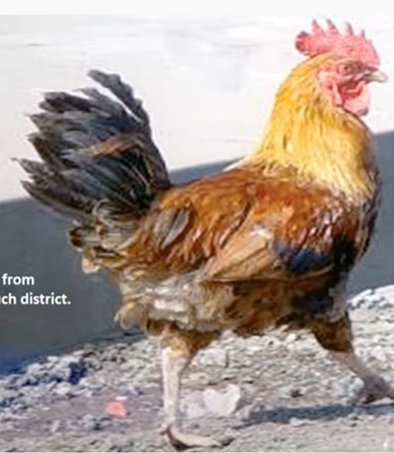
Ankaleshwar is a native chicken breed
of Gujarat state in Western part of India. The home tract of this breed is Ankleshwar
region of Bharuch district and Narmada region of Gujarat. These birds are
mostly reared by the tribal communities in their backyard and the average flock
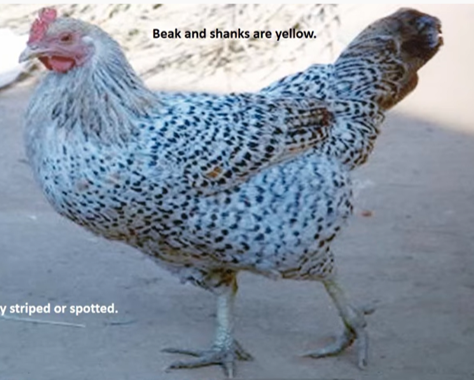
size is around 5-10 fowls. The birds are yellow in colour with black strips or
white colour with black strips. The skin colour of the bird is yellow. The
birds have single and rose comb. They are small to medium sized birds.
Unique meat and egg quality traits of indigenous chicken breedsa
Body weights of Ankaleshwar chicken at
8 and 12 weeks of age are 0.55 Kg in male and 0.46 Kg in female; 0.83 Kg in
male and 0.75 Kg in female, respectively. Age of the first egg lay is around 179.9
days and annual egg production is around 79.3 eggs with average weight of an egg
of 35.09 g. The egg shell colour is light brown. The egg albumin and yolk
indices are 0.08 and 0.36, respectively while Haugh unit is 83.68.
|
MALE
|
FEMALE
|
|
2. Aseel
Unique morphological characterization of native chickens of India
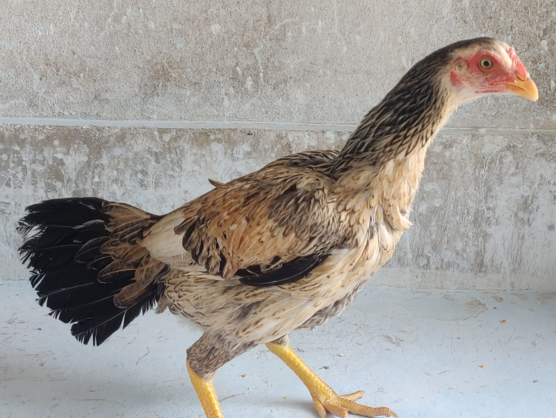
Aseel is a native chicken breed of
Andhra Pradesh in South Eastern part of India. The home tract of this breed includes
East Godavari, Visakhapatnam and Vizianagram regions of Andhra Pradesh. These
birds are unique for their pugnacity, stamina, majestic gait, and fighting
characteristics. Based on plumage colour, there are 7 varieties of this breed,
which are peela (brilliant red), yarkin (dark and red), Nurie (white), Kagar
(dark), Chitta (highly contrasting silver), Teekar (earthy colored) and Reza
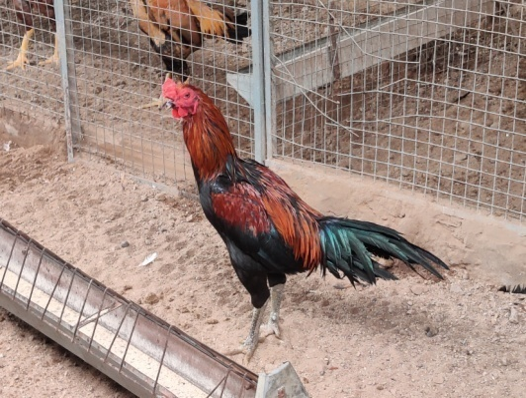
(light red). The birds have pea comb, and wattles and ear lobes are bright red.
The face is long and thin, and not secured with plumage. The eyes are compact,
very much set, and present intense looks. The neck is long, consistently thick
however, not fleshy. The body is round and short with wide bottom straight back
and close-set solid tail root. The plumage has no cushion and the quills are
intense. The tail is little and hanging. The legs are solid, straight, and set
well apart.
Unique meat and egg quality traits of indigenous chicken breedsa
Body weights of the adult Aseel birds
are 4 to 5 Kg in cock; 3 to 4 Kg in hen; 3.5 to 4.5 Kg in cockerel; 2.5 to 3.5 Kg
in pullets. Age at first egg is 27 to 29 weeks. The The birds are poor layers
producing 30 to 36 eggs annually with average egg weight of 50g at 40 weeks of
age. Broodiness is common in this breed.
The Aseel birds
are noteworthy for their meat characteristics. Shear force value and
hydroxyproline substance of meat were higher in Aseel birds as compared to
commercial broiler chicken. Due to high collagen content and interlocking
connective tissue between the muscle fibers, Aseel meat has the firm surface
with higher red shading and lower softness than that of broiler chicken.
Scanning electron microscopy reveals that the muscle fibers in Aseels are
orchestrated in a more coiled pattern making the muscle strong. Aseel cock has
solid legs, lean meat, and less stomach fat making them high-esteem meat birds
notwithstanding their forceful battling capacity. The meat: bone proportion is
lower (1.07:1.0) in Aseel than in commercial broiler (1.31-1.0).
|
MALE
|
FEMALE
|
|
3. Busra
Unique morphological characterization of native chickens of India
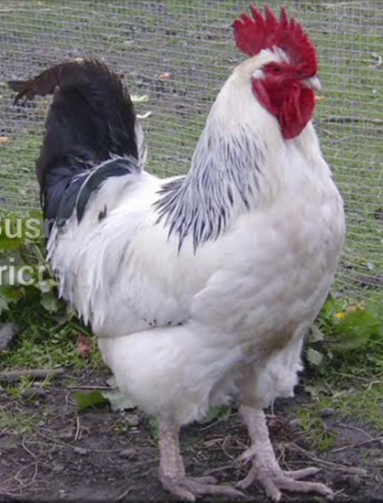
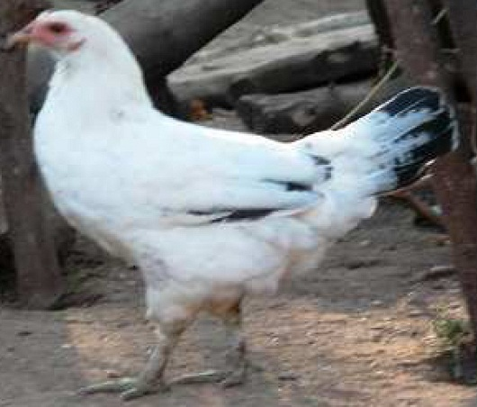
Busra breed of chicken is found in
the Navapur and Sakri Taluk of Dhule region of Maharashtra state, and the
Songadh and Uchchal Taluks of Surat area of Gujarat state of Western India. The
plumage of this bird is mostly white blended with black quills on the neck,
back, tail, and reddish brown colour on shoulder and wings. The comb is red,
single, little to medium in size and stands erect. The beak is yellow and
wattles are red, with yellow shank.
Unique meat and egg quality traits of indigenous chicken breedsa
The average body weights of Busra are
0.85 to 1.25 Kg in cocks and 0.80 to 1.20 Kg in hens. The birds start laying at
the age of 5-7 months. Annual egg production is around 40-55eggs with average
weight of 28 to 38 g. The egg-shell colour is light brown.
The albumin and
yolk indices of eggs of this breed are 0.05 and 0.35, respectively while Haugh
unit is 73.66. The birds are mostly reared by the farmers for meat purpose.
|
MALE
|
FEMALE
|
|
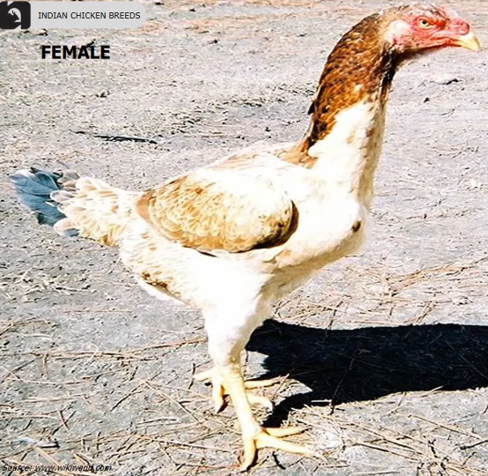
4. Chittagong (Malay)
Unique morphological characterization of native chickens of India
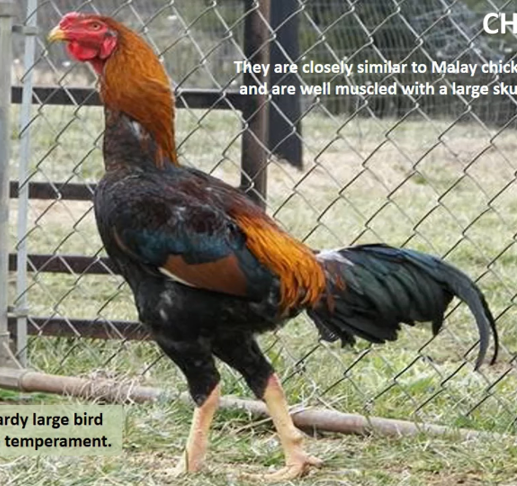
Chittagong breed of chicken is found
in the North-Eastern states of India and Eastern parts of Bangladesh. The plumage
colour is buff, white, black, dark brown and grey while the plumage pattern is
solid, firm, short and glossy. The birds have bright eyes, long mane and tail,
high headset with contentious personality. The comb is small and pea type.
Wattles are red. Shank and beak is yellow in colour.
Unique meat and egg quality traits of indigenous chicken breedsa
The matured body weights of Chittagong chicken breed are 3.50-4.50 Kg in cocks and 3.00-4.00Kg in hens. These
birds are also considered as game fowl.
|
MALE
|
FEMALE
|
|
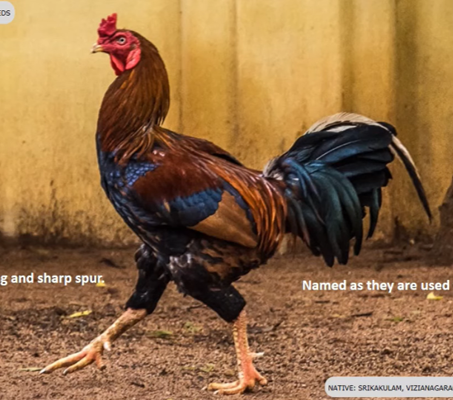
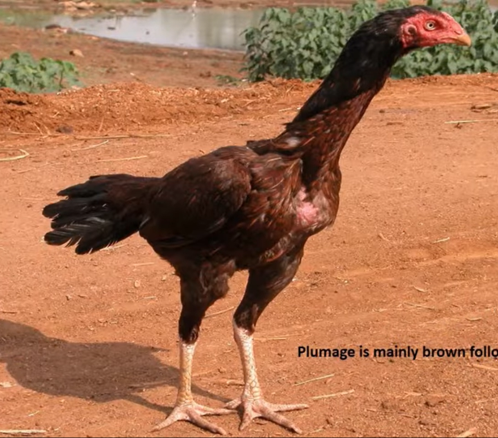
5. Danki
Unique morphological characterization of native chickens of India
Danki chicken breed is found mostly
in the Vizianagram and Srikakulam regions of Andhra Pradesh and southern parts
of Odisha. Plumage colour is primarily brown followed by black. Cocks have
sparkling blue dark quills on wings, breast, tail, and thighs. The neck is
darker contrasted with the remainder of the body. Wattles are absent. The comb
is red, pea type, and compacted. Spur is long and sharp in cocks and little in
hens.
Unique meat and egg quality traits of indigenous chicken breedsa
The matured body weights of Danki
breed are 3.12 Kg in cocks and 2.22 Kg in hens. The birds start laying at the
age of 6-8 months and annual egg production is around 25-35eggs with egg weight
of 37 to 54 g. The egg shell colour is light or dark brown.
The albumin and yolk indices of eggs are 0.05 and 0.27, respectively while Haugh unit is 66.81.
The Danki is essentially used by the village farmers as a warrior flying bird
and game purpose.
|
MALE
|
FEMALE
|
|
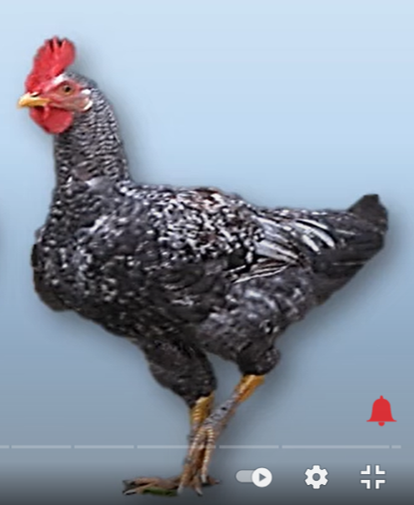
6. Daothigir
Unique morphological characterization of native chickens of India
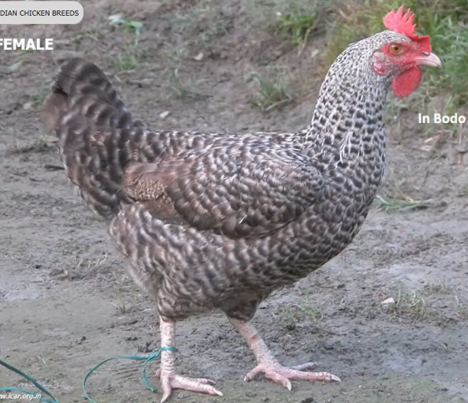
Daothigir birds are found in Bodoland,
Kokrajhar, Chirang, Udalguri, and Baska areas in Assam state of North Eastern
India. Plumage colour is mostly black sprinkled with white quills. The comb is
red, single, erect, and enormous.
Unique meat and egg quality traits of indigenous chicken breedsa
The matured body weights of Daothigir
birds are 1.79 Kg in cock and 1.63 Kg in hen. The age at first egg is 6-8
months and the annual egg production is around 60-70eggs. The egg weight is
around 44.4 g. The egg shell colour is brown and creamy.
The albumin and
yolk indices of eggs are 0.06 and 0.29, respectively while Haugh unit is 76.35.
These birds are mostly raised by the Bodo tribals in Assam.
|
MALE
|
FEMALE
|
|
7. Ghagus
Unique morphological characterization of native chickens of India
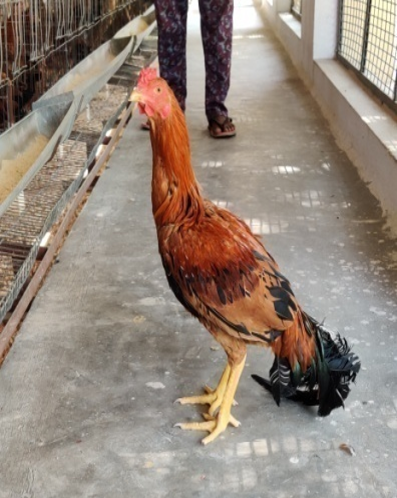
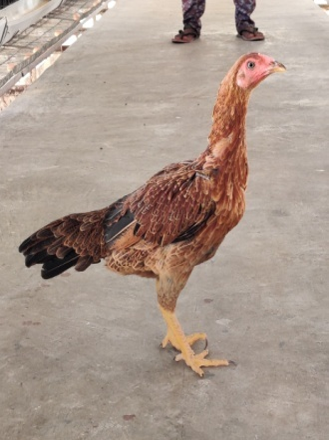
Ghagus birds are found in the Kolar
and adjacent areas of Karnataka, and Eastern parts of Andhra Pradesh states of
South India. The plumage is mostly brown, trailed by black. Blue dark plumages
are found on the bosom, tail, and thighs of cocks. The neck is secured with golden
plumages. Wattles are absent. The comb is red and pea or single sort. Spur is
short in cocks.
Unique meat and egg quality traits of indigenous chicken breedsa
The matured body weights of Ghagus breed
are 2.16 Kg in cock and 1.43 Kg in hen. The birds start lay eggs at the age of
5-8 months and the annual egg production is around 45-60 eggs with average egg
weight 40.25 g. The egg shell colour is brown. The egg albumin and yolk indices
are 0.06 and 0.38, respectively while Haugh unit is 76.79. The birds are reared
up to a great extent for eggs and sometimes, used as game fowls.
|
MALE
|
FEMALE
|
|
8. Harringhata Black
Unique morphological characterization of native chickens of India
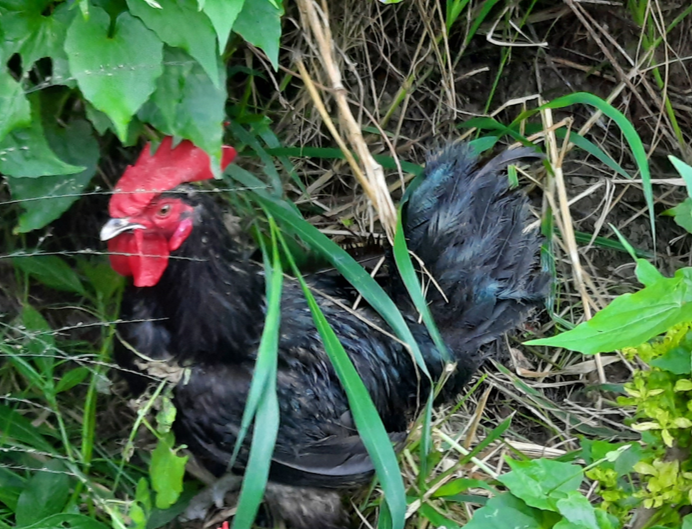
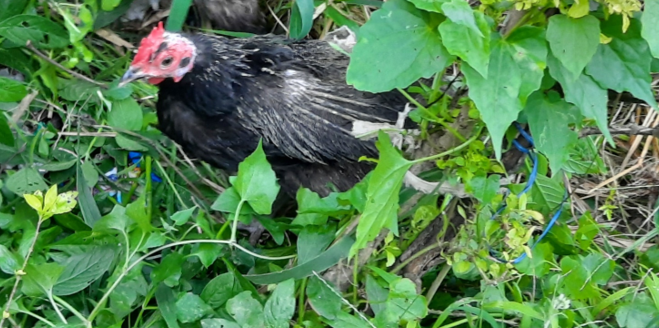
Home tract of Harringhata black
chicken breed is Nadia and North 24 Pargana districts of West Bengal of Eastern
India. Plumage colour of the birds is dark black with red comb and wattles
while the shanks are white in shading.
Unique meat and egg quality traits of indigenous chicken breedsa
The body weights of Harringhata black
chicken breed at 6, 8 and 10 months of age are 1.08, 1.13 and 1.28 Kg in males
and 0.98, 1.06 and 1.12 Kg in females, respectively. This breed is one of the good
layers among all Indian native breeds. The age at first lay varies from 3.5 to
8.2 months and annual egg production is around 130eggs with average egg weight
of 36.53 g. The egg shell colour is brown and cream white. The birds run first
and can fly to protect themselves from predators. These birds show resilience
to some of the common illness of birds. The egg albumin and yolk indices are
0.07 and 0.47, respectively and the Haugh unit is 76.97. Sometimes, the hen's
broodiness and mothering ability are utilized by the farmers to incubate and
brood eggs of other fowl and even ducks.
|
MALE
|
FEMALE
|
|
9. Kadaknath
Unique morphological characterization of native chickens of India
Kadaknath chicken is found at Jhabua
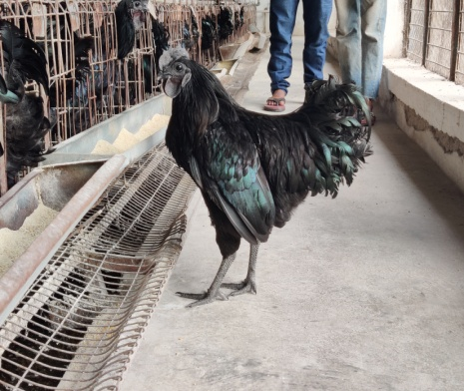
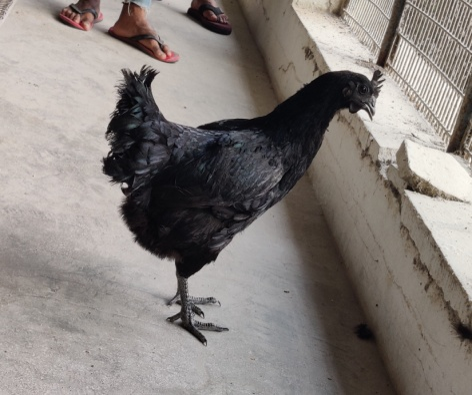
and Dhar Districts of Madhya Pradesh of middle India. All the tissues of these birds
are black and consequently, these birds are named as Kali masi chicken. There are three varieties of
Kadaknath chicken, which are jet black, golden and pencilled. Day-old
chicks are somewhat blue to dark with unpredictable dull stripes over the back.
Adult plumage differs from silver and gold-spangled to pale blue black with no
spangling. The skin, beak, shanks, toes, and bottoms of feet are slate like in
shading. The comb, wattles, and tongue are purple. A large portion of the inner
organs shows intense dark coloration and blood is darker than that of other
birds. The black shade of the birds is the due to intense melanin deposition or
fibrimelanosis in the tissues.
Unique meat and egg quality traits of indigenous chicken breedsa
The matured body weights of Kadaknath
chicken are 1.50 Kg in cocks and 1.20 Kg in hens. The average age at first egg
is 185 days and the annual egg production is around 120-140 eggs. The eggs are
light brown in color. Egg weight is around 46g. Consumers prefer Kadaknath meat
due to its desirable flavour and leanness of meat (0.11 to 0.52% abdominal fat)
as compared to the commercial broiler meat (1.74 to 1.85% abdominal fat). The bird is very popular among the
tribals and Adiwasis mainly due to its adaptability to the local environment,
disease resistance, tasty meat quality, texture and flavour and me dicinal value such as meat as aphrodisiac (Believed to
infuse vigor in Male) and treating women's sterility, abnormal menstruation,
and habitual abortion.The meat of these birds has a geographical
indication (GI Tag) tag that was approved by the Indian government in 2018.
|
MALE
|
FEMALE
|
|
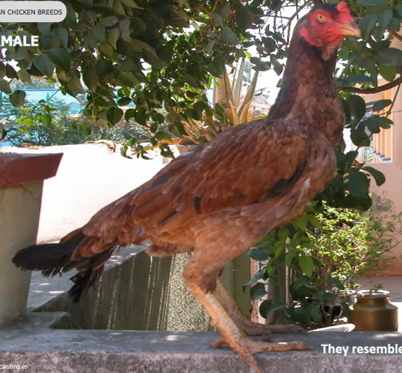
10. Kalasthi
Unique morphological characterization of native chickens of India
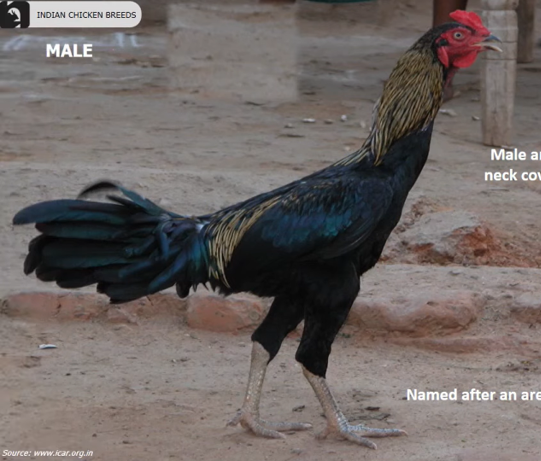
Kalasthi Indigenous chicken is found
at Chittoor, Nellore and Cuddapah districts of Andhra Pradesh state in South
India. The plumage colours of the birds are bluish black or brown with sparkling
golden in the neck and wings. Legs are proportionately longer and wings are
dorsally set with uncovering thighs encompassed with smooth plumages. Wattles
are absent in this breed. The comb is red, pea type, and compact. The spurs of
the birds are small.
Unique meat and egg quality traits of indigenous chicken breedsa
The adult body weights of Kalasthi
chicken are 2.48Kg in cock and 1.85 Kg in hens. The birds start to lay at 5-9
months of age. The annual egg production is around 30-40eggs with average egg weight
of 42.91 g. The egg shell is brown in colour. The egg albumin and yolk indices
are 0.05 and 0.35, respectively and the Haugh unit is 68.81. The birds are
mostly preferred for meat purpose.
|
MALE
|
FEMALE
|
|
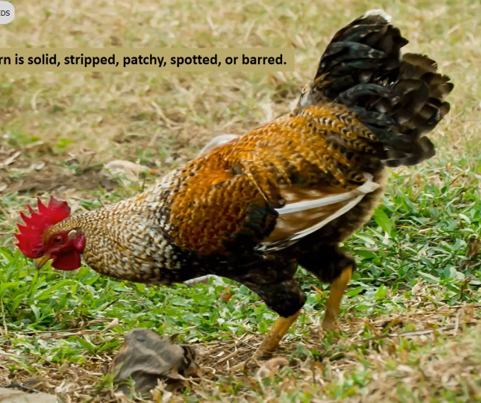
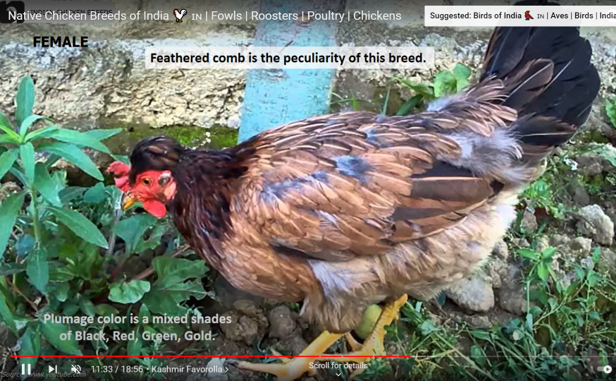
11. Kashmir Favorolla
Unique morphological characterization of native chickens of India
Home tracts of Kashmir Favorolla
breed include Anantnag, Baramullah, Budgam, Kupwara, Srinagar and Pulwama
districts of Jammu and Kashmir of North India at an elevation of 1,500 to 2,000
meters above the sea level. These birds are locally known as "Kashir Kukkar". This
breed is very much adapted at cold atmospheres and hilly landscapes. These
birds have jet black, dark brown and golden to pure white plumage colour while
plumage pattern varies from solid to dull striped and spotted. The skin and
shank colours of the birds are white and yellow, respectively. The birds have little
single comb and wattles.
Unique meat and egg quality traits of indigenous chicken breedsa
The average body weights of Kashmir
Favorolla breed are 1.87 Kg in cocks and 1.41Kg in hens. The age at first egg
is around 210 days while annual egg production of hens are around 60-85 eggs
with average egg weight of 45.76 g. The egg shell colour varies from light to
dark brown. The egg albumin and yolk indices are 0.05 and 0.35, respectively
and the Haugh unit is 70.26. The birds are relatively more resistant to
bacterial diseases, which was reported in an experiment where a comparison of
Kashmir Favorolla with commercial birds under similar management condition
indicated that the commercial birds suffered heavy mortality (More than 60%)
from an infectious bacterial disease within a period of 3 weeks, but Kashmir
Favorolla birds virtually escaped the outbreak. The birds are known for their hardiness and can survive and produce at sub-zero temperature.
|
MALE
|
FEMALE
|
|
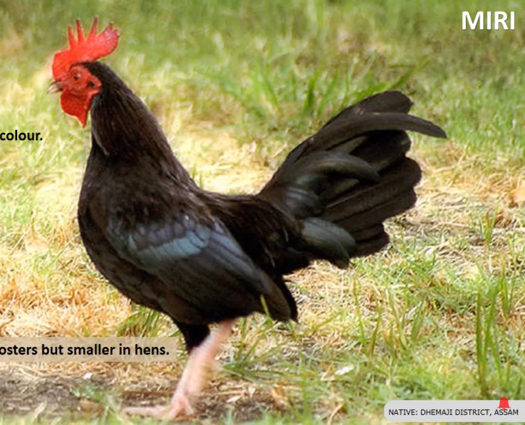
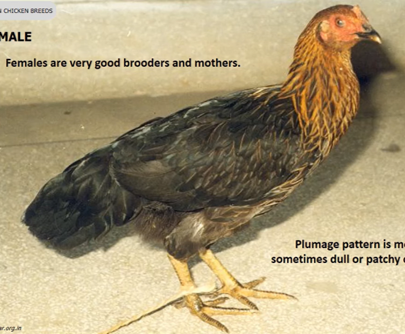
12. Miri
Unique morphological characterization of native chickens of India
Miri Indigenous breed is found at Dhimaji,
Lakhimpur and Upper Assam areas of Assam state in North Eastern India. These
birds are mostly reared by the Mising or Miri Tribes of Assam and the birds are
locally called as "Porog". The plumage colours of the birds are white followed
by brown and black. The plumage pattern is solid, but few spotted and striped
patterns are also found. The skin and shank colour is white to yellow. The comb
is single and red in colour while ear lobes are mostly red.
Unique meat and egg quality traits of indigenous chicken breedsa
The average body weights of Miri
breed at 6 and 12 months of ages are 1.06 and 1.52 Kg, respectively. The birds
start to lay at the age of 212 days and the average annual egg production is 62
eggs with egg weight of 42.06 g. The egg shell colour is light to dark brown.
The egg albumin and yolk indices are 0.10 and 0.44, respectively and the Haugh
unit is 81.64. These birds are reared for dual purpose (Egg and meat).
|
MALE
|
FEMALE
|
|
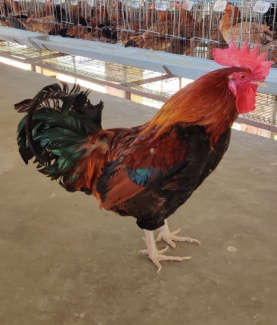
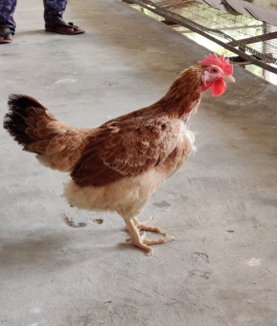
13. Nicobari
Unique morphological characterization of native chickens of India
Home tract of Nicobari chicken breed is
Andaman & Nicobar Islands of South India located at Bay of Bengal. The
plumage colour of the birds is brown or black or white. The birds are very short-legged
and they have single red colour comb. Wattles and ear lobes are pinkish in
colour. The shank and skin is pinkish white.
Unique meat and egg quality traits of indigenous chicken breedsa
The body weights of Nicobari breed at
8 and 12 weeks of age are 0.24 and 0.39Kg, respectively while the matured body
weight is 1.20 Kg in cocks and 0.90 to 1.00 Kg in hens. The birds are very much
adaptable to the hot and humid tropical conditions. Nicobari fowl is
comparatively resistant to Newcastle disease, Marek's disease, IBD, Salmonella,
E. coli and coccidiosis and in the field, vaccination is not provided to
the birds. The age at first egg is 201.6 days while annual egg production is
148.7eggs with average egg weight of 44.01 g. The Nicobari is one of the best
layer Indian birds. Broodiness is not so common in this breed. The egg shell
colour is white or light brown. The egg albumin and yolk indices are 0.09 and
0.29, respectively.
|
MALE
|
FEMALE
|
|
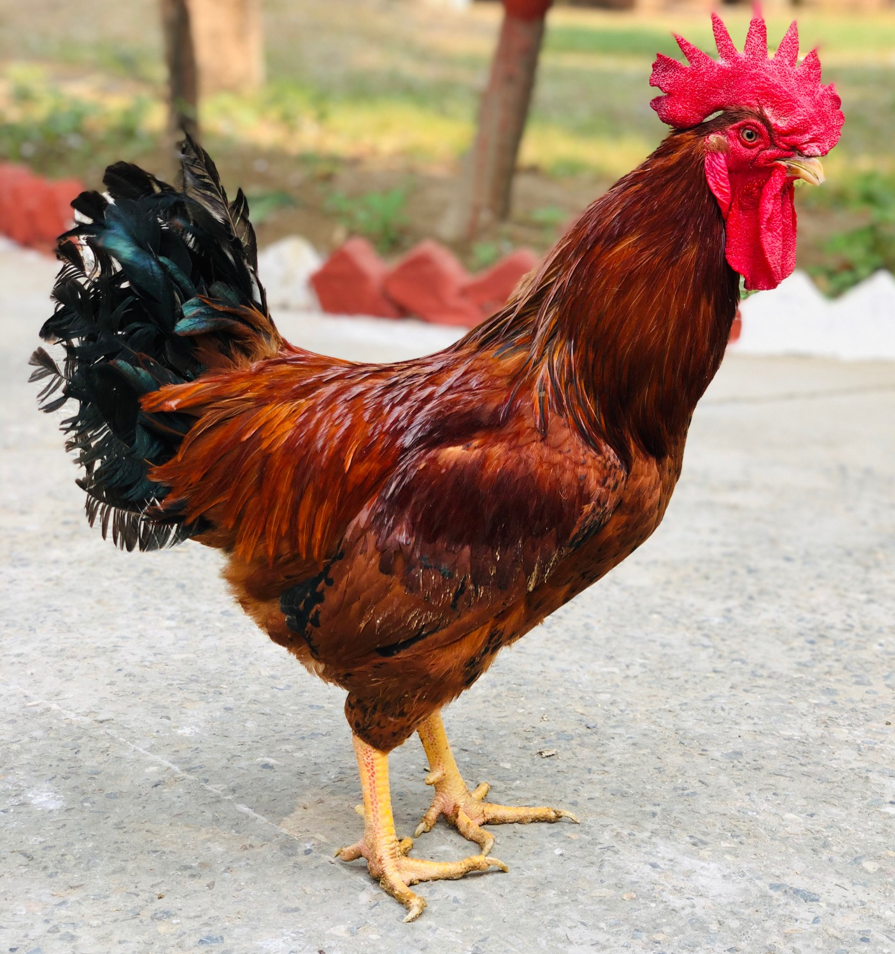
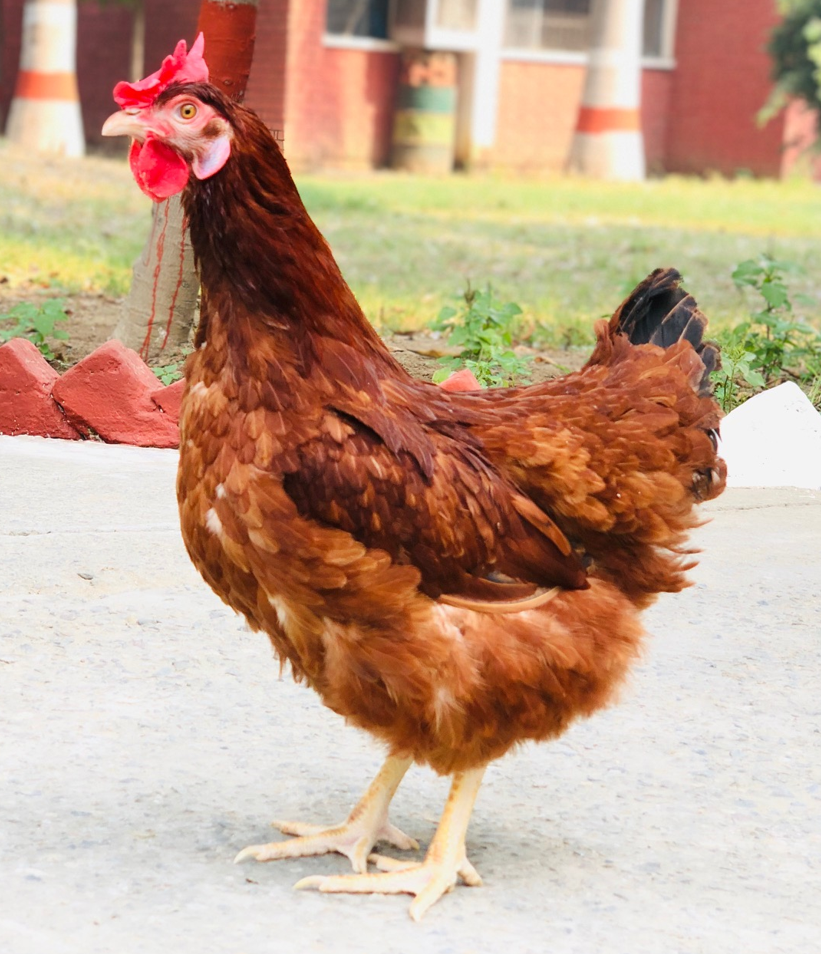
14. Punjab Brown
Unique morphological characterization of native chickens of India
Punjab Brown breed is found in
Gurdaspur area at Punjab state and Ambala and Yamunanagar areas at Haryana
state of North India. Plumage colour of the birds is mostly brown and in some
cases, black or white with golden colour in neck, wings and tail regions. The
plumage pattern is usually solid but, spotted or striped ones are also found. Male
birds have dark spots/stripes on their neck, wings, and tail. Skin is white and
shank is yellow in colour. Ear lobes are mostly brown and sometimes, white or
grey. The comb is red, single and erected. Beak is yellow.
Unique meat and egg quality traits of indigenous chicken breedsa
The matured body weights of Punjab
Brown breed are 2.14 Kg in cocks and 1.56 Kg in hens. The age at first egg is
5-6 months and the annual egg production is around 60-80 eggs with average egg
weight of 46.00g. Egg shell is light brown in color. The egg albumin and yolk
indices are 0.10 and 0.40, respectively and the Haugh unit is 82.80. The birds
are reared for dual purpose (for both meat and eggs).
|
MALE
|
FEMALE
|
|
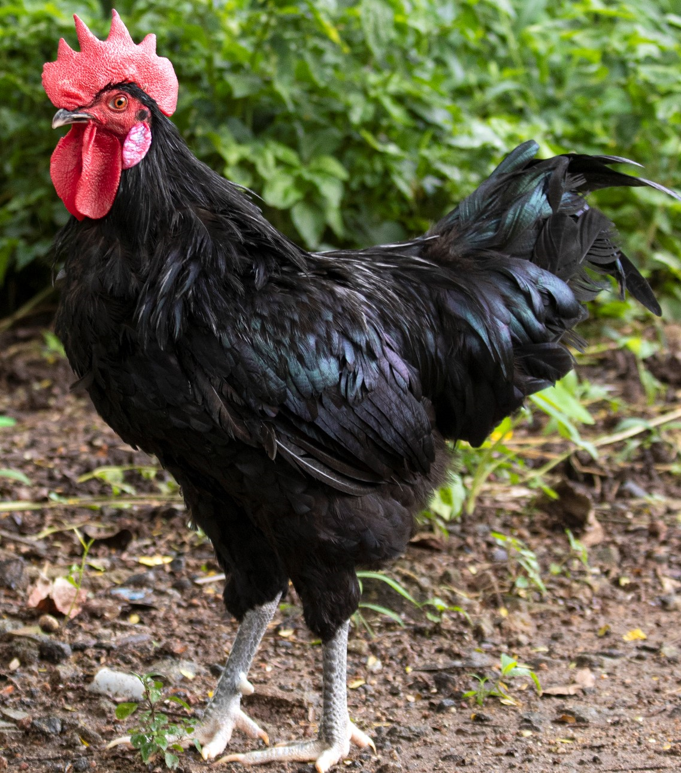
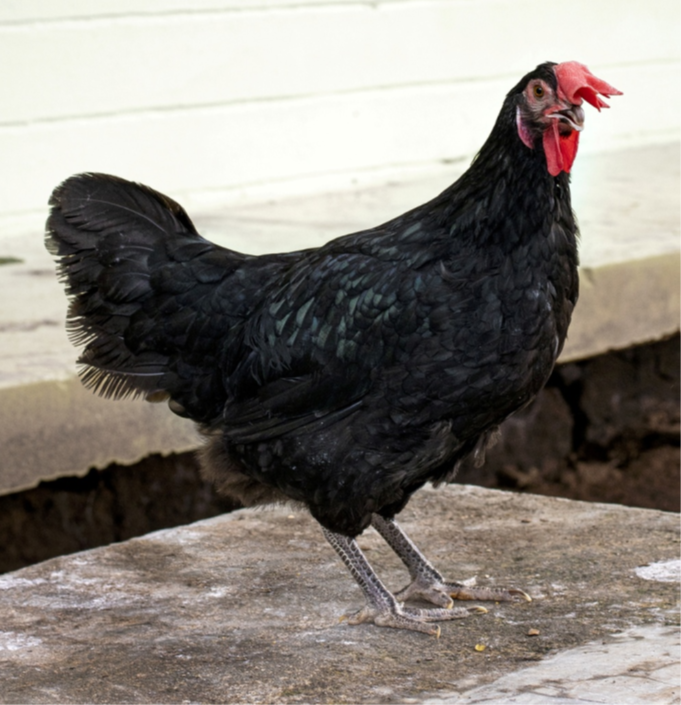
15. Tellichery
Unique morphological characterization of native chickens of India
The home tract of Tellichery breed is
Calicut, Kannur and Malappuram regions of Kerala state, and Mahe area of
Puducherry Union Territory of South India. Plumage colour of these birds is
black with a sparkling blue tint on the hackle, back, and tail quills. The comb
is red, single, and large. Ear lobe is mostly red in colour with white markings
in some birds. Skin is greyish and shank is blackish grey in colour. Beak is
blackish in appearance.
Unique meat and egg quality traits of indigenous chicken breedsa
The adult body weights of Tellichery
breed are 1.62 Kg in cocks and 1.24 Kg in hens. The age at first egg is 5-8
months and annual egg production is around 60-80 eggs with average egg weight
of 40.02 g. Egg shell colour is brown. The egg albumin and yolk indices are
0.06 and 0.32, respectively and the Haugh unit is 69.07. However, these birds
are reported to be less affected by Newcastle disease where no vaccination is
provided in the field.
|
MALE
|
FEMALE
|
|
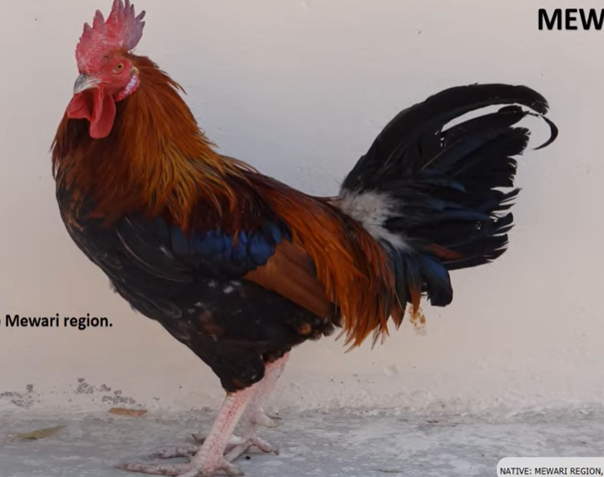
16. Mewari
Unique morphological characterization of native chickens of India
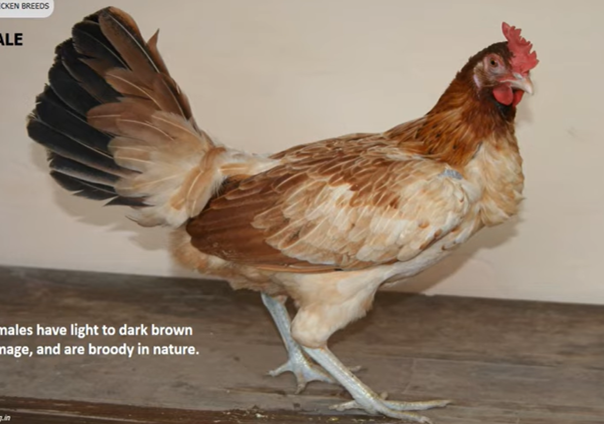
Mewari chicken breed is found in the
Central and Southern parts of Rajasthan state of Western India.
Unique meat and egg quality traits of indigenous chicken breedsa
Adult body weight of Mewari chicken
is about 1.90 Kg in cocks and 1.20 Kg in hens. Annual egg production ranges from
37 to 52 eggs. Egg weight is about 53 g. The birds are very much adapted to
desert climate (Thar Desert) of Rajasthan state. Farmers rear this breed for
dual purpose (Egg and meat).
|
MALE
|
FEMALE
|
|
17. Kaunayen
Unique morphological characterization of native chickens of India
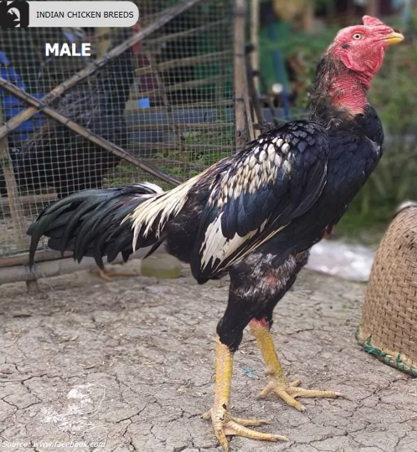
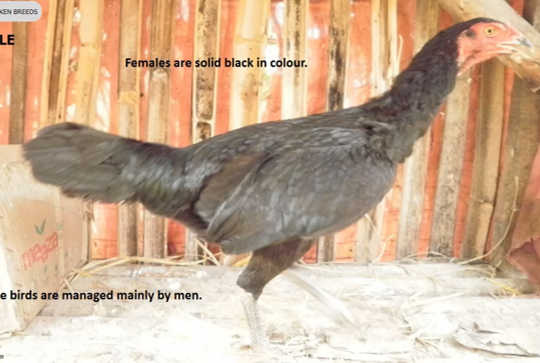
Home tract of Kaunayen breed is Thoubal,
Imphal West, Imphal East and Bishnupur regions of Manipur state in North
Eastern India. Hens are commonly black, gray, blackish gray or whitish gray
while cocks are bluish black quills on wings, bosom, tail and thighs. The comb
is red and pea type. Spur is long and sharp in cocks.
Unique meat and egg quality traits of indigenous chicken breedsa
The matured body weight of Kaunayen
breed is 3.01 Kg in cocks and 2.32 Kg in hens. The hens start to lay eggs at
the age of 5-7 months and annual egg production is around 35 eggs with average
egg weight of 42.43 g. The egg albumin and yolk indices are 0.07 and 0.38,
respectively and the Haugh unit is 76.88. The birds are, sometimes used by the
local villagers as game fowls.
|
MALE
|
FEMALE
|
|
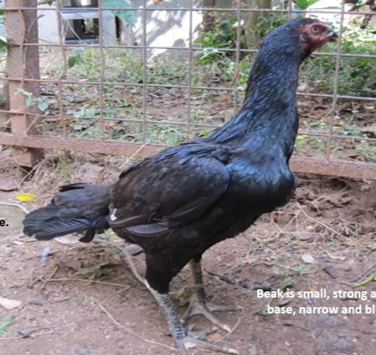
18. Hansli
Unique morphological characterization of native chickens of India
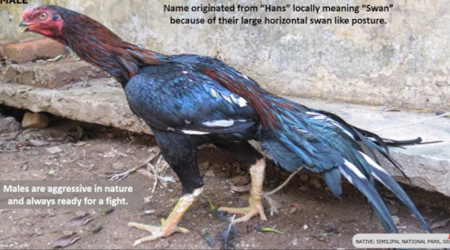
Hansli breed is found in Mayurbhanj
and Keonjhar districts of Odisha state of Eastern India (ICAR-NBAGR Newsletter
2017). Birds are tall and thin and have lofty look. The plumage is
predominantly black. Males have golden yellow or red hackle and saddle quills (ICAR-NBAGR
Newsletter 2017). The comb is pea type and red in colour. Earlobe, and face are
red in colour. Wattles are small and rudimentary, and red in colour. Spur is
present in males. The beak is small, strong, and stout, and light yellow in
cocks and dull grey in hens. Wattles are small and wings are medium to huge and
well folded. Skin colour is pink.
Unique meat and egg quality traits of indigenous chicken breedsa
Body weights of Hansli breed at 8
weeks of age are 0.43 Kg in male and 0.38Kg in female. Matured body weights are
2.50 to 3.00 Kg in cocks and 1.50 to 2.00 Kg in hens. The age at first egg is 6
months and annual egg production is around 50-60 eggs with average egg weight
of 46.00g. The egg shell colour is light brown. Male birds are very aggressive
and are also used as game fowls. This breed is relatively more resilience to
intestinal parasites and ectoparasites such as ticks and mites.
|
MALE
|
FEMALE
|
|
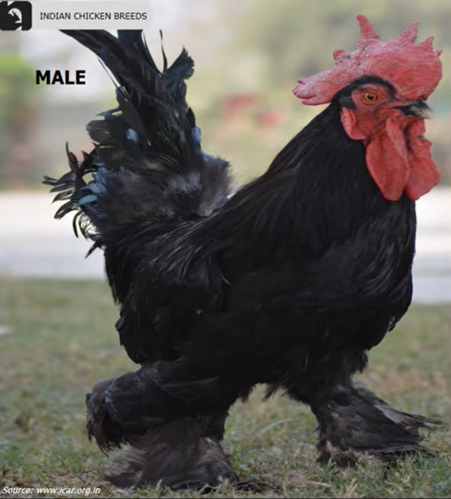
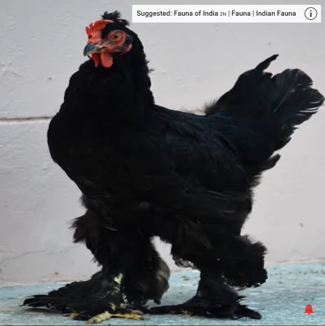
19. Uttara
Unique morphological characterization of native chickens of India
Home tract of Uttara breed is Kumaon
district of Uttarakhand state of North India. These birds are reared mostly by
the tribal people of Uttarakhand state. Plumage colour of the birds is black.
The birds have feathered shank, which is not present in any of the Indian
Indigenous chicken breeds.
Unique meat and egg quality traits of indigenous chicken breedsa
Adult body weight of Uttara breed is
1.30 Kg in cocks and 1.10 Kg in hens. The hens are very good layers laying
around 125-160 eggs annually with egg weight ranging from 49.8-52.7g. The birds
are tough and are adaptable to cold temperature and high altitude of Himalayan
mountain range.
|
MALE
|
FEMALE
|
|
|
)
)
)
)
)
)